
STRATDELA Special #17
New START and its finish

Many are aware that this week sees the release of the final episode of the second season of the Fallout TV series the end of the 2010 New START Treaty. There has been much expert commentary in the media, and officials, especially Russian ones, have not remained silent. I’ve decided to make a few important points for my subscribers. Good topic for the first 2026 issue anyway.
The agreement was about reductions. The reductions have been implemented, although there are mutual suspicions about their irreversibility, especially with regard to American exercises with bombers and submarine-launched missiles. According to the latest available data, the situation is as follows.
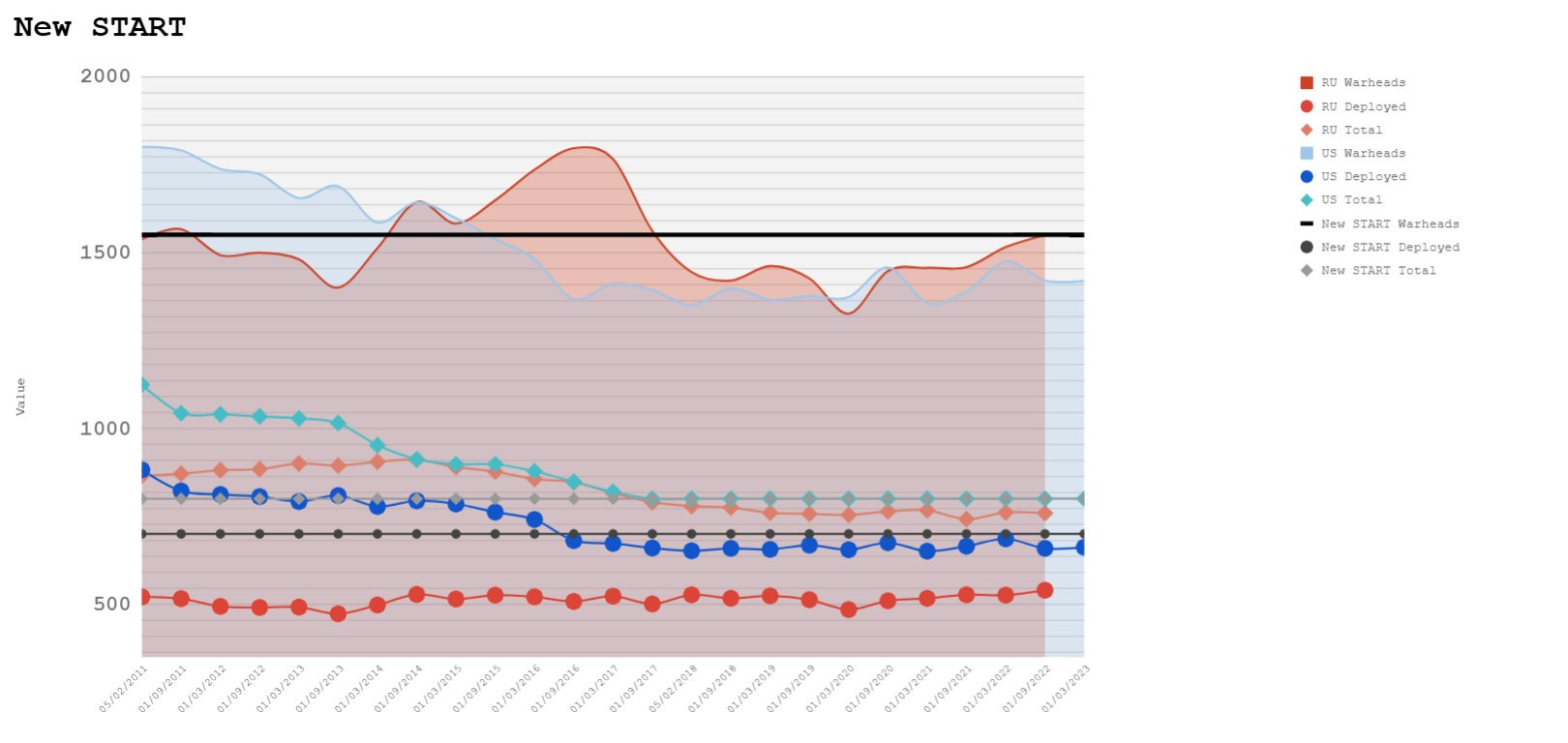
Although I believe that this month we may hear mutual accusations of violations of the ‘ceilings’.
Moscow proposed to extend the New START ‘ceilings’ (!!!not the Treaty itself!!!), Washington remained silent (as of this writing), although they reportedly tried to come up with arguments on how to refuse in a more elegant way. Some American experts pointed out that, in response to the Russian proposal, their leadership should have come up with a counter-idea about data exchange or even inspections, i.e. to cancel the 2023 suspension, but this did not happen either.
The end of the New START is not a catastrophe. However, in the absence of any negotiation process, we are collectively beginning to lay the groundwork for a multilateral and multi-domain arms race. Strategic weapons require long development and deployment cycles, and the decisions that will be made in the coming months and years will determine the strategic landscape for decades to come. And these decisions will be made based on the most negative scenarios for the development of the arsenals of a likely adversary. Or, rather, multiple likely adversaries.
There will be no immediate and sharp increase; it is a complex process. But some increase beyond ‘1550-700-800’ is possible. The Americans are confident that this is the only way to deter China (it is unclear how this will help though), and we are unlikely to ignore it (although we could). China is doing their thing, France and the UK are also looking for ways to enhance strategic deterrence vis-a-vis Russia (and probably eventually vis-a-vis the U.S. as well ), the remaining four nuclear powers are mainly solving their own narrow tasks, but at the same time are exerting an increasing influence on the Nuclear Five.
The prospects for any control over strategic weapons will, in principle, depend heavily on the atmosphere in which the New START ends. If a joint Russian-American statement were to be issued these days saying what a good treaty it was, how it successfully fulfilled its objectives but does not fully meet today’s realities, and that we will now actively consider, with the involvement of third countries, what to replace it with, that would be one thing. It would be quite another thing if we were now to intensify the exchange of mutual accusations of varying degrees of validity. By the way, the idea that the deployment of Oreshnik IRBM outside national territory is a violation of the New START is quite popular among some Western experts.
In the short term, there will be less data on strategic arsenals, but all parties involved may begin to talk more actively about themselves and each other. During the absence of bilateral and multilateral treaties, unilateral and proactive transparency may well play a stabilising role.
The understanding that without arms control, national security suffers first and foremost will undoubtedly return. There are plenty of ideas on how to form such a ‘framework’ for a polycentric nuclear world™, but there is a lack of political will. The Russian leadership has demonstrated a very deep understanding of the issues that need to be taken into account in the future. The proposal made during Trump’s first term to jointly seek a solution to the ‘security equation’ taking into account all strategic capabilities, offensive and defensive, nuclear and non-nuclear, also remains relevant.
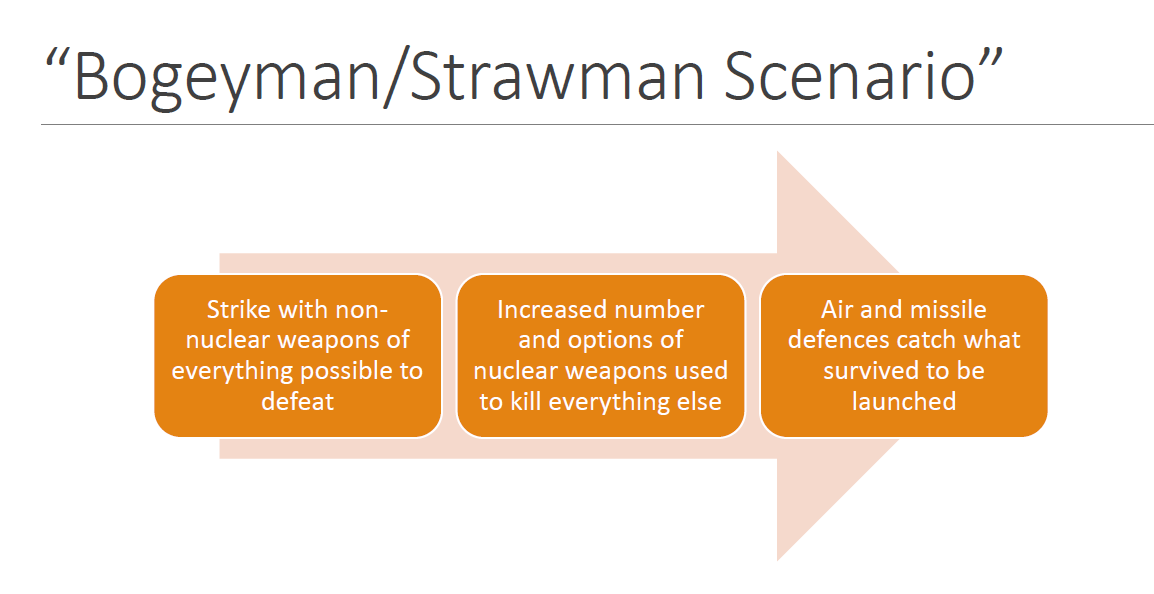
But the key question remains: is Washington prepared to engage in strengthening strategic stability at all, or will those who advocate replacing the ‘stability-instability paradox’ with the ‘instability-stability paradox’ prevail? Perhaps the Americans now might be much more interested in making potential adversaries nervous about their retaliatory capabilities.
That said, I remain somewhat optimistic. At the very least, the topic is getting rather high on the agenda and we might see some kind of bilateral and multilateral engagements.
There are a lot of very interesting and important topics related to New START, if you are interested in some of those specifically - feel free to reach out directly, would be happy to shed light.
Stay tuned for new issues in 2026, there will definitely be a lot to talk about.
P.S. Fun fact: there is an ongoing project on conversion of Topol’-M ICBM into a space launch vehicle called Start-1M by a company called New Start. No, really.