
STRATDELA Special #18
Russian view of French evolution


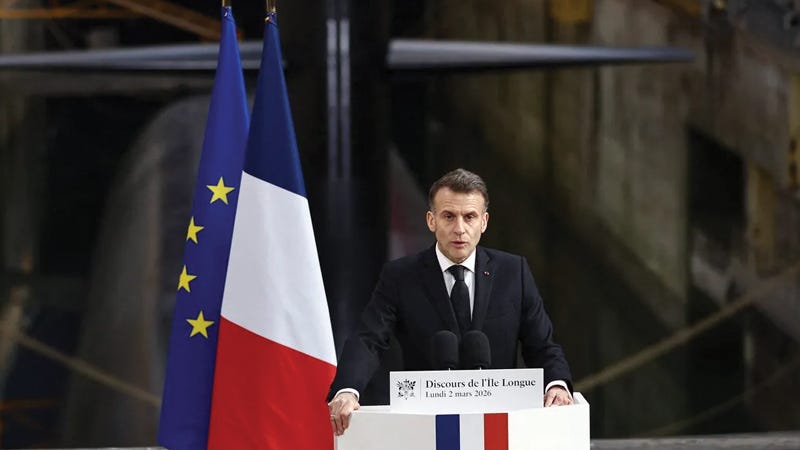
Everyone is well-aware of the latest Macron’s speech on French Deterrence and its evolving posture. I was asked about the Russian discourse regarding this process, and decided to publish a STRATDELA special on this matter. This issue will have three parts: specific Russian reactions, French nuclear posture over the years and possible future evolution.
Russian reactions
European dimension of the French nuclear deterrence is hardly news, although, of course, now it becomes something more real. So, first, what I personally think about it, and than some links to statements by others.
As part of its stated policy of ‘forward deterrence’, Paris does not yet plan to deploy nuclear weapons on the territory of its allies, but it may well use that territory to disperse delivery systems. At the same time, allies will increasingly be called upon to support nuclear operations using their conventional forces.
However, Paris does not intend to share the right to decide on the use of nuclear weapons. The Franco-British framework, however, is a separate matter, not least because the UK is a legitimate nuclear power (albeit one that is heavily technologically dependent on the US).
Expanding the nuclear arsenal and refusing to publish information about it is a rather serious move, signalling, first and foremost, a shift away from transparency and disarmament in Paris’s general approach. Well, such is the world, although the N5 countries will have a tough time at the NPT Review Conference. It is not yet entirely clear what form this expansion might take, but more on that later.
Joint statements with Merz, and slightly earlier with Starmer, as well as the statements already made by the leadership of Belgium, Poland and some other countries, indicate that the allies are ready to accept the French nuclear umbrella. They have not yet been presented with the costs (financial, material, security), but they certainly will be.
Particularly interesting in the context of allied structures is the creation of two ‘nuclear steering groups’ with the same name but seemingly different functions: the Franco-British and Franco-German groups. It is unlikely to be a complete analogue of NATO’s Nuclear Planning Group, which also exists more for the sake of appearances regarding the allies’ participation in American planning (they met recently, incidentally), but the story is an interesting one.
It is emphasised both by Western and Russian observers, and I shall emphasise it too: French forward deterrence does not replace American extended deterrence, but rather augments it. However, how it will work in practice (if at all) remains to be seen.
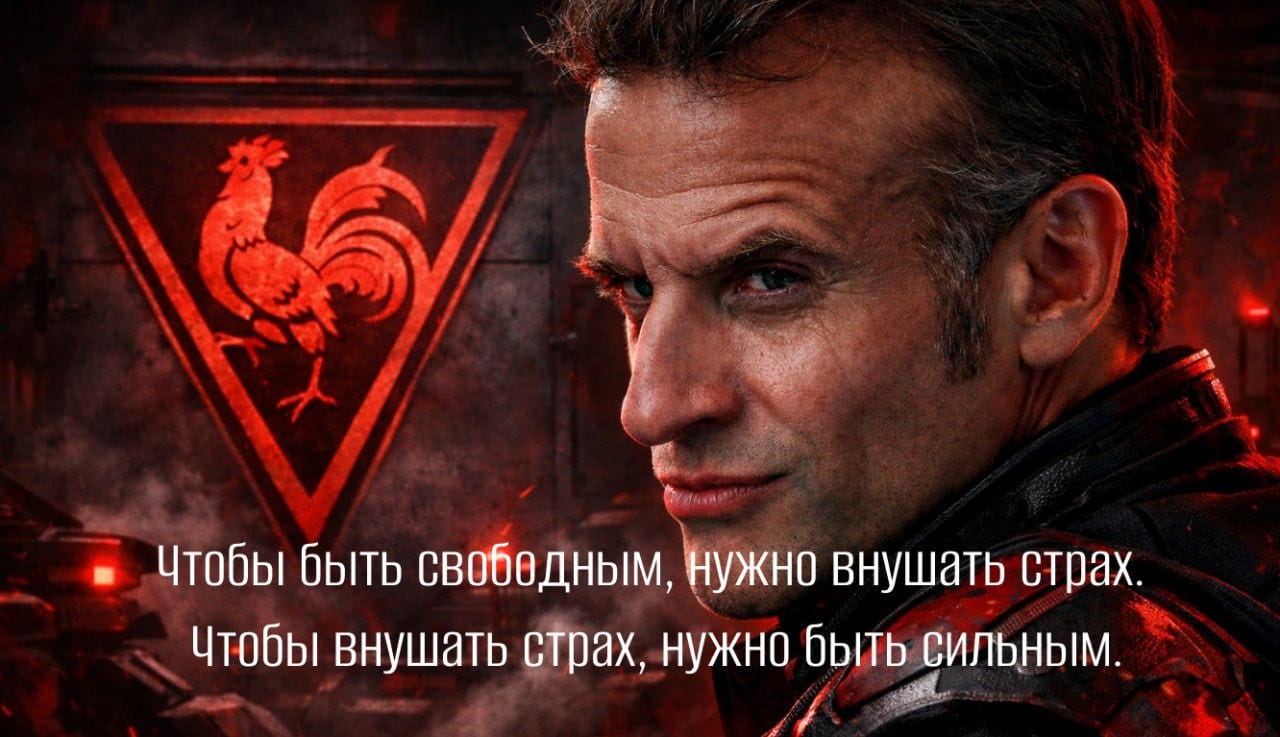
Finally, traditional Soviet translation of the word ‘deterrence’ used to be ‘intimidation’, or rather ‘inciting terror/fear’ - ‘устрашение’. So hardly anyone was really surprised by that Macron’s phrase that has been widely circulated.
The most detailed Russian response has been published by the MFA and is available in English here (in French as well by the way).
These are the most important quotes, from my perspective:
…NATO countries in Europe are establishing cross-cutting coordination mechanisms on nuclear policy issues, including the open transition by the United Kingdom and France to joint planning for the use of nuclear weapons and the conduct of related operations. London’s substantive participation in this bilateral format effectively links British-French cooperation with the work of NATO’s Nuclear Planning Group, which operates with increasing British involvement but without the direct participation of France, a point Paris has for many years emphasised in asserting the supposed full autonomy of its nuclear capability.
…
…this highlights the increasing degree of coordination and interaction among NATO countries in matters relating to potential decisions on the use of nuclear weapons against a common adversary and their implementation. From the standpoint of the security interests of the Russian Federation, it is of fundamental importance that the North Atlantic Alliance traditionally regards our country as such an adversary. This is not only undisguised but is strongly underscored.
Other notable comments were provided by different politicians and experts.
Dmitry Peskov, Kremlin spokesman, specifically addressed the point that nuclear weapons:
There is some truth in that—and a fair amount of it. Indeed, nuclear deterrence remains the cornerstone of global security.
However, he emphasized that we should not forget about nuclear non-proliferation.
Ambassador Mikhail Ulyanov, head of the Russian Mission to the international organizations in Vienna, underlined that under such circumstances France should become a part to arms control and disarmament talks:
This is a rather dangerous trend. Macron is, in effect, confirming that France must join the nuclear disarmament talks should they begin
This by the head of Duma international affairs Committee Leonid Slutsky sounds a bit radical, but such attitudes are quite popular in Russia:
Nuclear hysteria is clearly on the rise against a backdrop of Russophobic paranoia. But European capitals are hardly in a position to expand the official membership of the “nuclear club”. If anything, they are only capable of creating a club of suicidal nations, where citizens are held hostage to the authorities’ self-destructive policies’
I think you get the point. There were also some media publications, including by yours truly, and here are some useful links:
Germany is launching a partnership with France on nuclear war preparedness - However, it will not be granted access to French nuclear weapons
What do Macron’s statements on ‘advanced nuclear deterrence’ mean? According to the French president, ‘to be free, one must inspire fear’ - Emmanuel Macron wants France to provide Europe with a nuclear umbrella. He has proposed the concept of ‘advanced nuclear deterrence’. Eight European countries have already signed up to it.
‘Umbrella’ delusions: where France’s nuclear ambitions in Eastern Europe are leading - Countries receiving warheads from Paris risk becoming a priority target in the event of a conflict with Russia
Silence is a sign of limited capabilities - Alexander Ermakov on the extent to which France is capable of expanding its nuclear forces
This last thing is kind of the most interesting one, but before that let’s take a look the evolution of the French nuclear capabilities.
Nuclear posture over the years
According to some estimates, France’s nuclear arsenal peaked in the early 1990s, standing at around 540 warheads deployed on strategic and tactical delivery systems. According to others, the 500-warhead threshold was exceeded in 1990, and reductions began shortly thereafter. These results were achieved ‘by inertia’ from a large-scale programme to modernise French nuclear forces carried out in the 1980s. It has been suggested that the aim of this modernisation was a shift away from a nuclear weapons role that was separate from the rest of NATO and purely deterrent, towards a desire among French politicians to play a more active role in the defence of Europe - already at that time.
The backbone of the strategic forces was the Redoutable-class SSBNs. In the second half of the 1980s, six such submarines were in service, and usually two were on combat duty at any one time. At that time, these submarines were being re-equipped from the M20 SLBM (single-warhead, TN 61, 1.2 Mt) to the M4 (up to six warheads, TN 71, 150 kt). This process is clearly the primary reason for the sharp increase in the number of warheads in the French arsenal. Initially, it was planned to build six new submarines to replace the Redoutable class, but in the end the order for the Triomphant class was reduced to four.
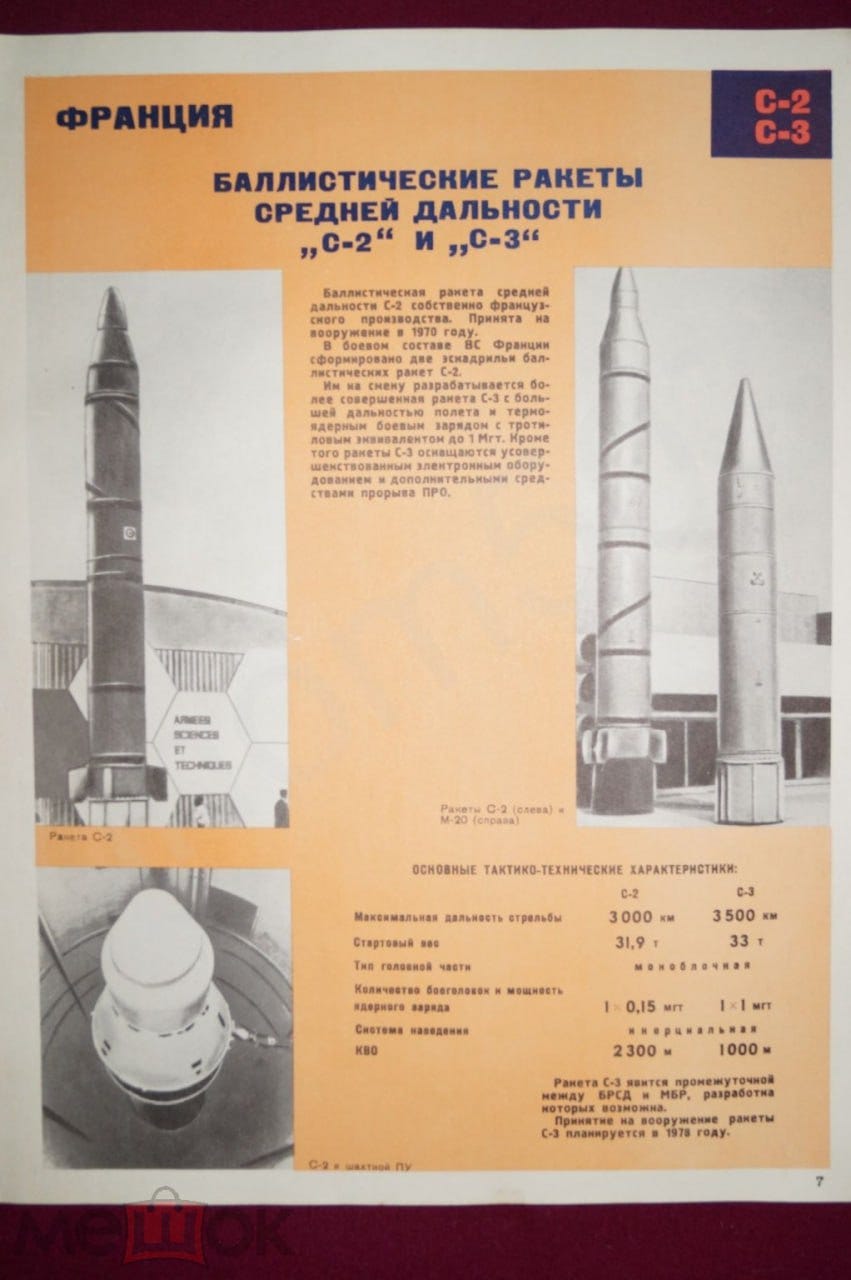
Partially unified with the M20 SLBM were the land-based S3 IRBMs (also a single-stage missile, TN 61, 1.2 Mt), deployed at the well-known Plateau d’Albion base. In 1984, the replacement of the previous S2 IRBMs with the S3 was completed. The main difference was the use of a megaton-class warhead and the missile’s fitting with a missile defence penetration system developed with US assistance. The range also increased to 3,500 km, which allowed it to strike targets across virtually the entire European part of the USSR (the S2’s range was also sufficient to reach at least as far as Moscow). It is interesting to compare this with the Pershing 2, which was widely discussed during the same period and caused great concern among the Soviet leadership, but whose range, as we know today, fell slightly short of reaching the Soviet capital.
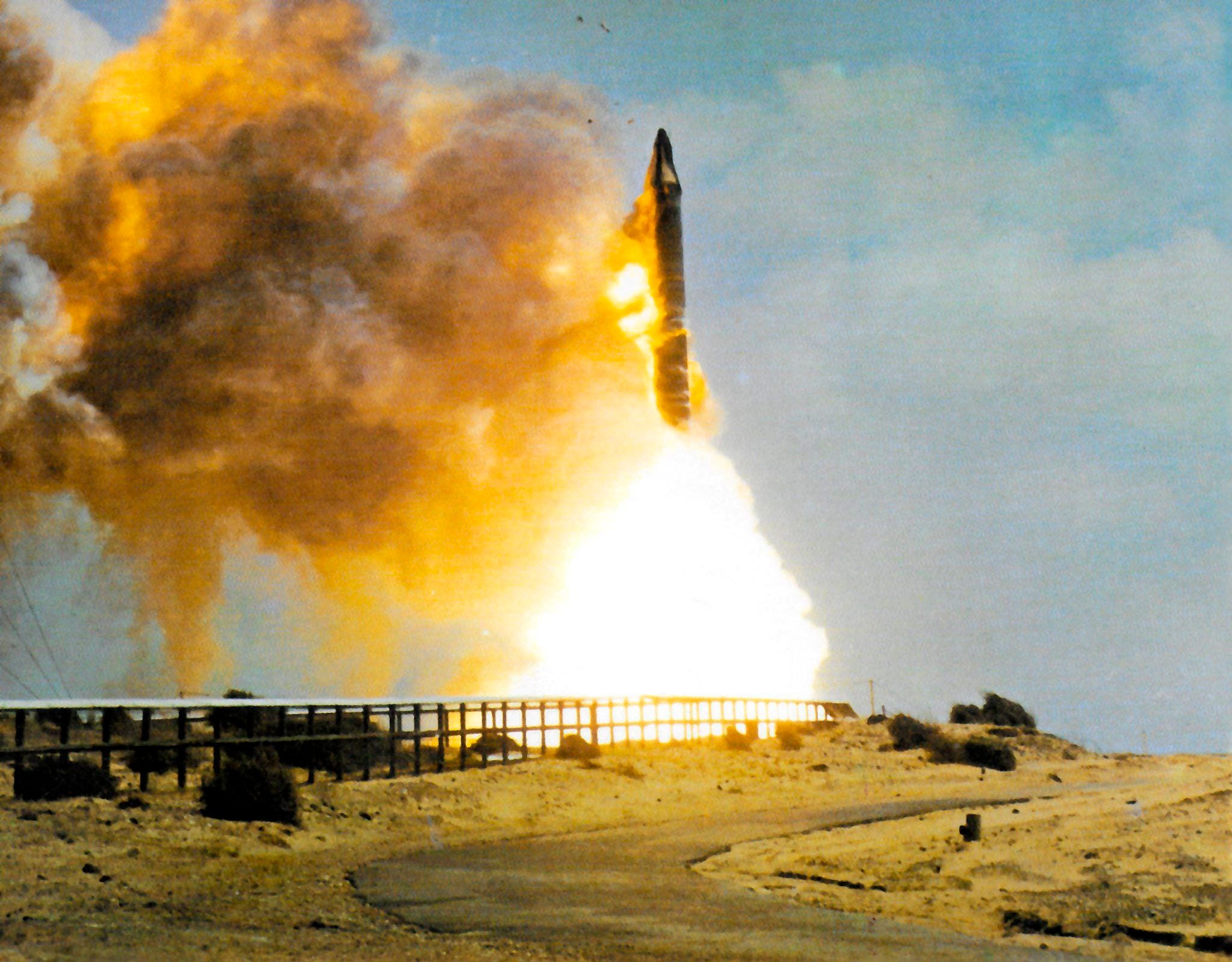
A total of 18 missiles of these types were deployed operationally, and a stockpile was produced for testing. The purpose of the Plateau d’Albion missile base and its place in French doctrine has always been a subject of debate, primarily due to its vulnerability – although the launch silos were well fortified and situated at a considerable distance from one another (around 5 km), it was clear that the USSR, particularly in the second half of the 1980s, was capable of destroying them all whilst expending a negligible fraction of its arsenal. Perhaps this was one of the reasons why the French were seriously concerned about the SS-20 ‘Pioner’ IRBM, and why French President Valéry Giscard d’Estaing supported the deployment of American intermediate-range missiles in Europe. Perhaps the d’Albion should be viewed as a permanently ready ‘land-based SSBN’, whose very vulnerability demonstrated France’s readiness to use nuclear weapons first and in the course of a demonstrative counterstrike – whilst retaining its last reserve in the form of SSBNs. Furthermore, their presence could have deterred an adversary from attempting limited ballistic missile strikes against specific targets, as they likely adhered to a ‘launch on warning’ tactic in the event of a crisis. In France, land-based strategic missiles were under the command of the Air Force.
The Army, for its part, was equipped with Pluton tactical missiles mounted on tank chassis. Their range of up to 120 km led to numerous jokes that French nuclear weapons were intended to strike the Germans. Thirty-five launchers were rapidly deployed, their main task likely being to deliver a ‘last warning’ strike against Soviet units invading France. It was envisaged that specially assigned UAVs would be used for the rapid detection of targets. No large stockpile of missiles and warheads was produced for the Pluton (possibly as few as 70 warheads), as it was assumed that if a final warning strike failed, the conflict would in any case escalate to a higher level.
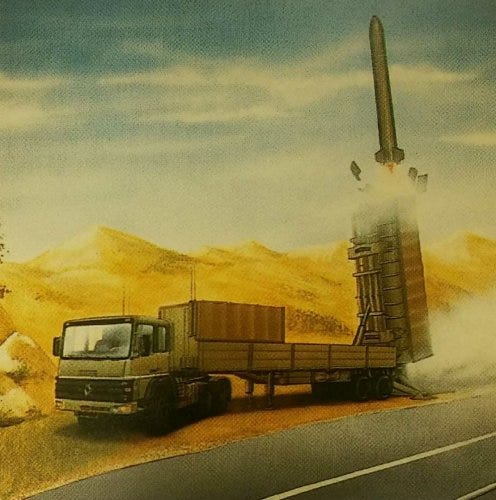
In the early 1990s, the more advanced Hadès missile system began to enter service. With a range of up to 450 km, excellent camouflage as an ordinary truck, and plans to develop versions with high precision and a neutron warhead, this missile system would have done credit to both Russian and American missile engineering. However, as the historical era had already changed, the Hadès missiles produced were immediately placed ‘in storage’, and only 15 launchers and 30 missiles were manufactured. The proposed conventional version of the missile was not developed, probably due to its high cost.
The air component of the French strategic nuclear forces was the first to become operational (in late 1964), but during the period in question it clearly played a secondary role. It is perhaps accurate to characterise France’s ‘strategic’ nuclear strike aviation at that time, and even more so now, as an advanced variant of tactical aviation – due to the limited number of delivery systems and warheads, a higher guarantee of target destruction was required. The limited scope of missions for strategic aviation clearly demonstrates that only 18 Mirage IVs were upgraded to the Mirage IVP variant, capable of carrying the ASMP cruise missile, which ensured a high probability of hitting a target protected by air defence. The rest of the Mirage IV fleet could only use free-fall bombs. Furthermore, for purely tactical missions, the SEPECAT Jaguar could be used (some Mirage IIIE squadrons also specialised in preparation for tactical nuclear strikes, but it was withdrawn from service by 1988), armed solely with free-fall bombs.
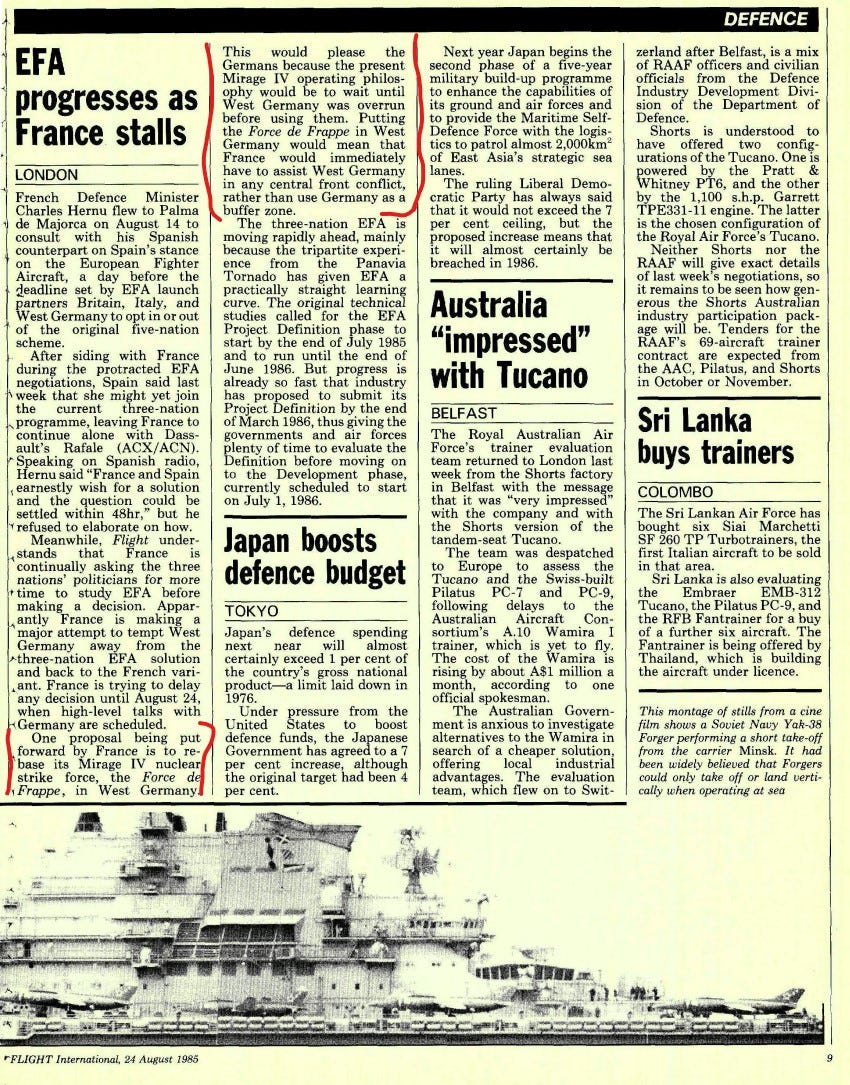
Surprisingly modern ideas were being put forward and even made it into the press in the mid-1980s! In reality, incidentally, French strike aircraft carrying nuclear weapons had already been deployed in Germany – but these were American nuclear weapons. Between 1963 and 1966, French Air Force F-100 ‘Super Sabre’ aircraft deployed in West Germany as part of NATO forces were trained to use American B28 bombs. Interestingly, de Gaulle’s fundamental position was that he opposed the deployment in France of nuclear weapons not under his full control; consequently, only the ‘overseas’ Super Sabre squadrons underwent training in their use.
From 1988, the Mirage 2000N began to enter service, designed to carry ASMP missiles (sources are contradictory, but it appears that for the first few years they were ‘unable’ to use the ASMP and could only employ AN-52 tactical bombs). From 1996, the Mirage IVs were stripped of their strike role, which, together with the decommissioning of free-fall bombs, was fully transferred to the Mirage 2000N and the ASMP.
As far as can be judged, in the early 1990s the French nuclear forces were in the process of transforming from a limited means of fulfilling a single task—‘deterrence from the weak to the strong’. The stockpile of tactical weapons was relatively small, and they were intended primarily for signalling purposes. Strategic weapons, on the other hand, were intended primarily for a retaliatory strike (likely preceded by a warning strike as well).
As a result of modernisation through the Hadès systems, the ground forces’ capabilities to engage targets—including small, hardened ones—in a hypothetical Central European theatre of operations would have increased significantly in both quantity and quality. Instead of a ‘final warning’ strike, the French army would be able to actively engage air defence targets in the DDR and western Czechoslovakia. The silo-based missiles at the Plateau d’Albion were to be replaced by a land-based version of the M45 SLBM. In this scenario, French silo-based missiles would have been capable of striking almost the entire territory of the USSR/Russia (with the exception of eastern Siberia and the Far East), and thanks to MIRV technology, the total ‘salvo size’ would have amounted to 108 warheads. This might even have created a French version of the Soviet/Russian dilemma regarding heavy ICBMs, which were simultaneously criticised for their increased vulnerability and for undermining strategic stability, whilst their effectiveness as a deterrent was highlighted.
The role of the air component would continue to decline (tactical aircraft with free-fall bombs would be readily replaced by Hadès) and would likely be no different from our current one – a small number of multi-role fighters equipped with ASMP-A missiles, supported by tankers (or from an aircraft carrier), delivering limited strikes at long range. The naval component, had five or six new-type submarines been built, would in fact have been twice as large as it is today in terms of the number on duty. Moreover, thanks to the increased range, patrolling and protecting the submarines would have been easier than before.
Had these measures been implemented, France would certainly still be the third nuclear power and could form the core of a fully-fledged ‘independent European nuclear force’. What can it realistically achieve today?
Possible future trends
First and foremost, it must be noted that anything can only be achieved in this area if French and other European politicians are able to maintain a consistent policy over many years. This is a prerequisite and perhaps the most difficult one.
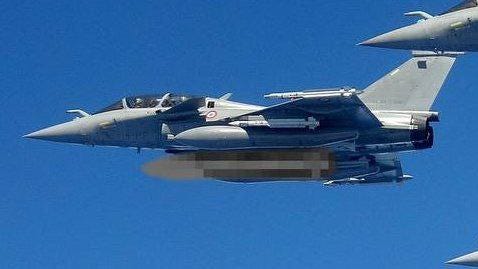
Next, the first steps could involve the distributed basing of Rafale fighters equipped with nuclear missiles in Germany and other interested countries (Scandinavia and Greece, for example), either on a permanent basis or during exercises or periods of heightened threat. It may be possible to produce additional ASMP-A missiles whilst awaiting the ASN4G (given that they are implementing a programme of extensive modernisation of the missile fleet to the ASMPA-R version, the capability to produce missiles likely exists, but it is not really clear, and it is possible that actually the units initially produced by Aérospatiale are now being used by MBDA) and to increase the number of fighter aircraft certified for missile deployment. Still, a gradual increase in the number of air-launched nuclear missiles in storage seems possible, including through an increase in orders for future hypersonic variants, alongside a rise in the number of Rafale aircraft in ‘strategic’ squadrons.
Of course, new SSBNs cannot be launched immediately, but the possibility of deploying M51 SLBMs on land could be considered, although this idea has a certain ‘toxicity’ (on the other hand, thanks to the missile’s greater range than before, it can be deployed by selecting an uninhabited area).
In the longer term (2030s–2040s), the FCAS advanced fighter programme could have become the embodiment of Europe’s ‘common nuclear weapon’, however current turmoil between French and German participants in this project makes it quite a challenge.
Developing a variant of the MdCN cruise missile with a light nuclear warhead would present an insurmountable challenge (as well as it’s possible ground-launched variant). Should this be implemented, the French Navy, incidentally, would acquire an equivalent to the American SLCM-N, suitable for deployment on Suffren-class submarines.
Increasing the production of the SNLE3G SSBNs is unlikely to make much sense, as it would be extremely costly in terms of time and resources, and the warheads would be required for other tasks. Judging by the modernisation process involving the replacement of one type with another, the French are capable of producing the latter in sufficient quantities to gradually expand their arsenal, the size of which is currently constrained by political directives. Furthermore, the next generations of M51-class SLBMs may carry a greater number of warheads, and SNLE3G number of launch tubes can be changed as well. Again, it cannot be ruled out that the service life of the existing SSBNs will be extended so that the current ones serve a little longer alongside the future ones.
At the same time, the most significant departure from traditional French views on deterrence as an exclusively nuclear phenomenon is the recognition of the role of joint non-nuclear systems projects in ensuring the sustainability of this deterrence and even in managing escalation. The importance of the ELSA (ground-launched itermediate-range missiles), JEWEL (missile attack early warning system) and ESSI (air/missile defence system, with the emphasis that this is against non-nuclear threats) projects is explicitly noted in the Macron-Merz statement.
At the same time, Paris is surely counting on ‘feeding’ its defence industry with allied funds.

So, that’s it. Feel free to ask for clarifications!
P.S. Don’t forget about this old issue on TEUTATES project…
P.P.S. I really wanted to give you a pack of good satellite pictures, photos and schemes with French nuclear bases, will do it next time. Stay tuned.
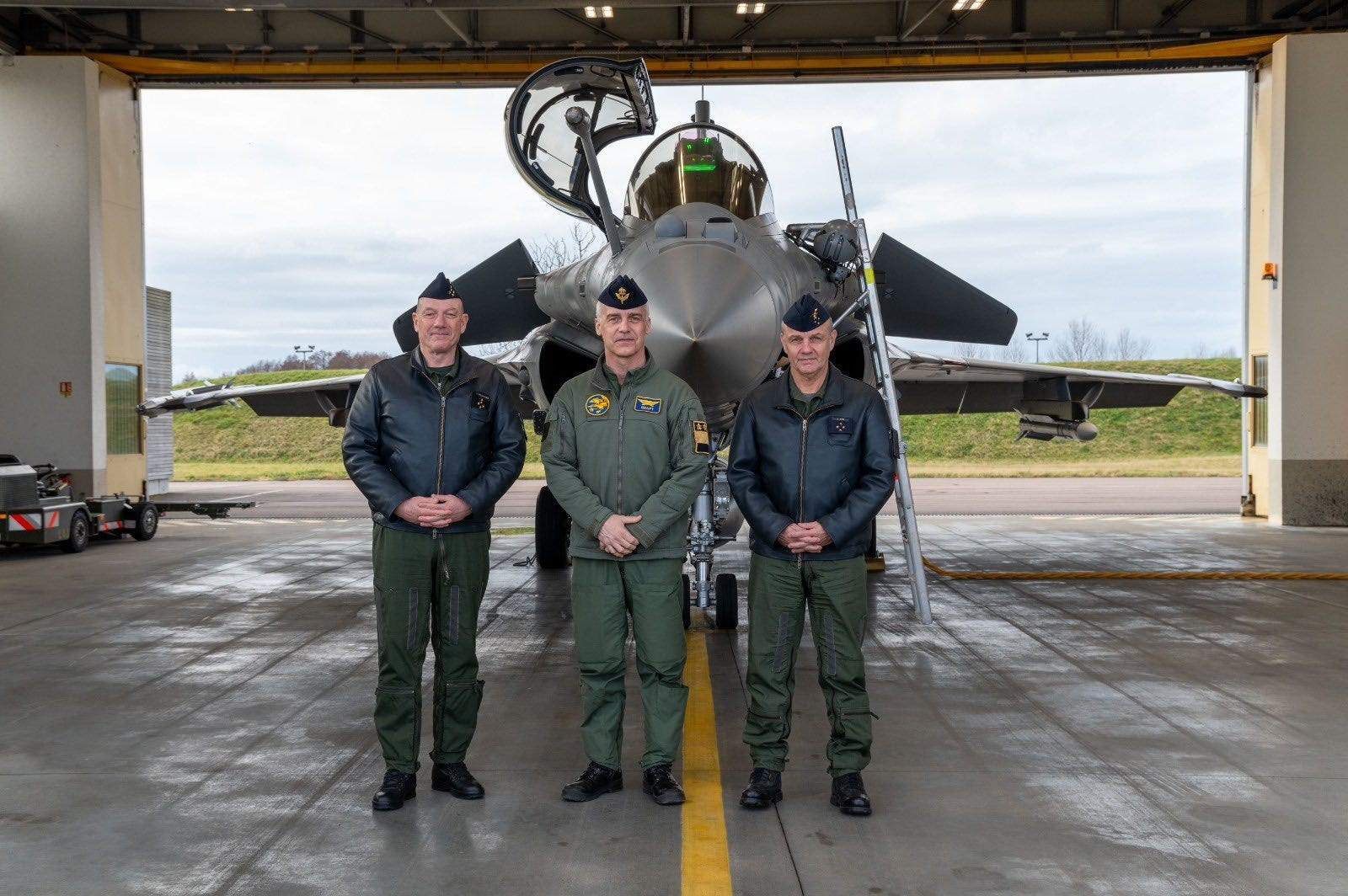
A teaser: Swedish Air Force Chief of Staff at Saint-Dizier on a ‘private’ visit.
Insightful